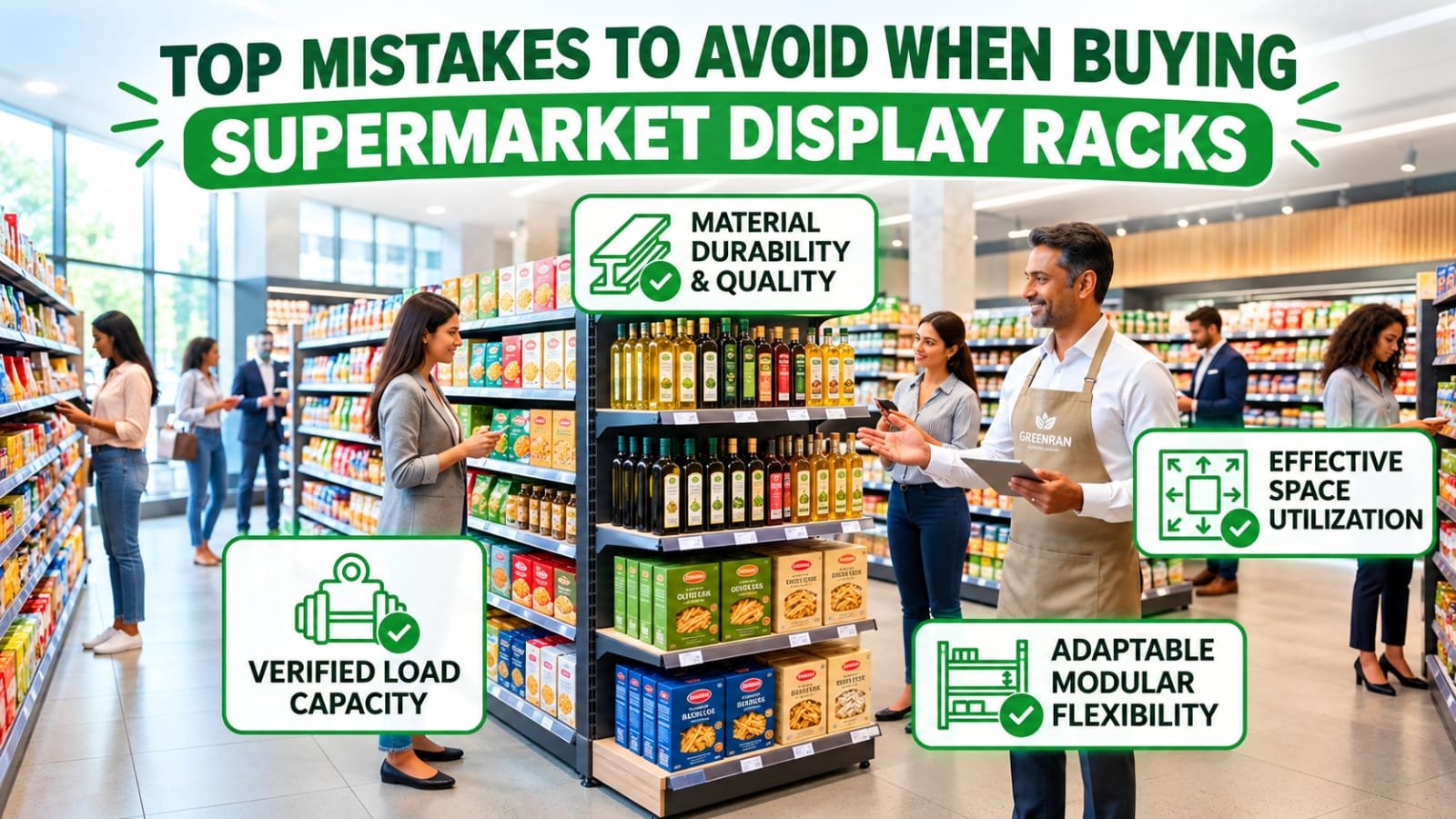
Buying supermarket display racks is a long-term business decision. A rack may look suitable at first, but overlooking important specifications, material quality, load capacity, or supplier reliability can lead to premature damage, replacement costs, and operational problems.
Many buyers focus only on appearance or immediate requirements and overlook the details that determine whether the racks will perform reliably in a busy retail environment.
Here are the most common mistakes to avoid when buying supermarket display racks.
1. Choosing Based Only on Appearance
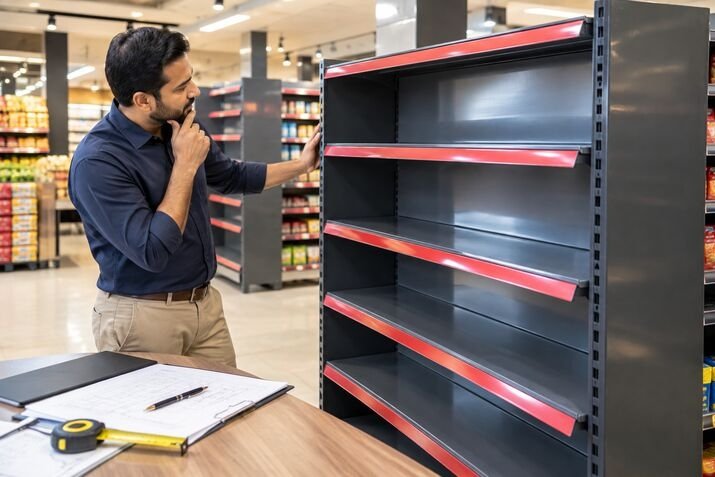
One common mistake is selecting racks primarily because they look attractive. Appearance is important for a professional retail environment, but it should not be the main purchasing criterion.
Before placing an order, buyers should verify:
- Material quality
- Construction strength
- Shelf specifications
- Load-bearing capacity
- Surface finish
- Durability
- Manufacturing quality
A good-looking rack that cannot withstand regular commercial use can become a costly replacement later.
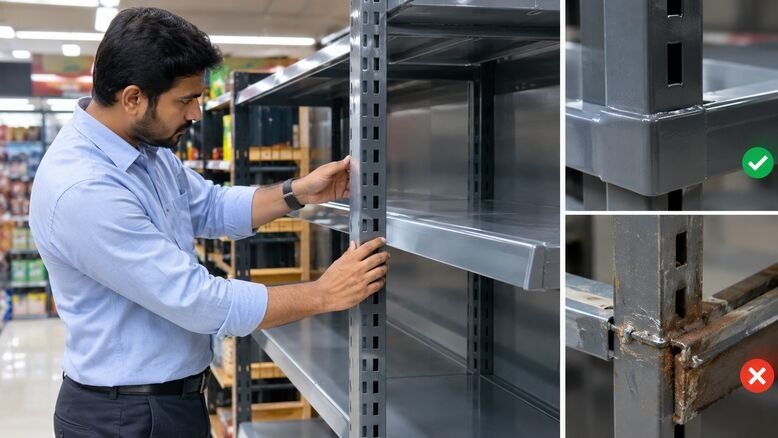
2. Choosing Low-Quality Material to Save Money
Using low-quality material can create problems such as bending, corrosion, damaged surfaces, and reduced service life.
Buyers should ask the manufacturer about the material used and its intended commercial application. For metal supermarket display racks, the material thickness, structural construction, welding quality, and surface treatment can all affect durability.
Instead of judging quality only by the initial purchase cost, consider how reliably the rack is expected to perform under regular retail use.

3. Ignoring Load-Bearing Capacity
Load capacity is one of the most important specifications to verify before purchasing supermarket display racks.
Different products can place different loads on shelves. Grocery products, packaged FMCG goods, bottles, containers, and other merchandise may create substantial shelf loads when stored in quantity.
Before ordering, confirm:
- Maximum load per shelf
- Maximum recommended load for the complete rack
- Shelf thickness and construction
- Whether the stated capacity applies to evenly distributed loads
- Manufacturer’s recommended usage conditions
Never assume that every supermarket rack can safely carry the same weight.

4. Not Checking Product Specifications Carefully
Another common purchasing mistake is ordering without reviewing the complete technical specifications.
Buyers should confirm the exact specifications offered by the manufacturer, including dimensions, material, shelf configuration, load capacity, finish, and other agreed requirements.
Written specifications are particularly important for customized orders because they provide a clear reference for what has been requested and what will be supplied.
5. Ignoring Dimensions and Product Requirements
Choosing dimensions without considering the actual merchandise requirements can create problems after installation.
The buyer should confirm the required rack dimensions and shelf requirements according to the products that will be displayed.
For example, products with different package sizes may require different shelf clearances or usable shelf depths. The important point is not to select dimensions simply because they are commonly used.
The manufacturer should receive clear product and measurement requirements before production begins.

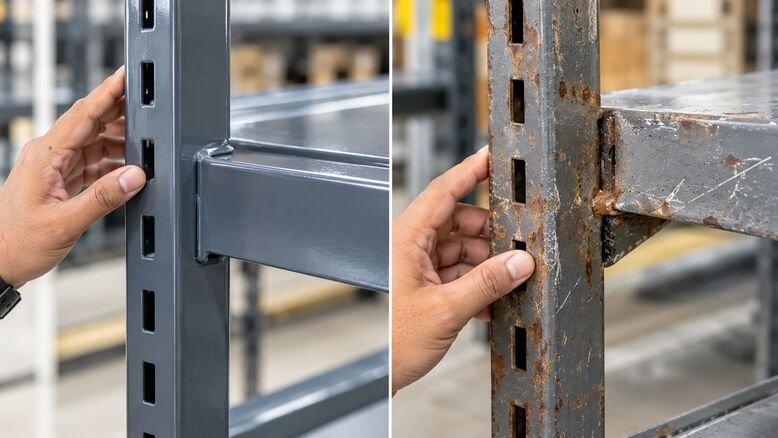
6. Failing to Check Surface Finish and Corrosion Resistance
Retail racks are used for long periods and are exposed to regular handling, cleaning, and environmental conditions. Poor surface treatment can result in scratches, corrosion, peeling, or deterioration over time.
Before buying, ask the supplier about
- Surface treatment
- Powder coating or other finishing process
- Corrosion resistance
- Scratch resistance
- Expected durability under normal retail use
A properly finished rack can maintain its appearance and structural protection for longer when it is manufactured and maintained correctly.
7. Choosing a Supplier Without Verifying Manufacturing Experience
The quality of the rack depends not only on the specification but also on the manufacturer’s ability to produce it consistently.
When choosing a supplier, buyers should verify the experience and manufacturing capabilities of an experienced supermarket display rack manufacturer before placing an order.
Before placing an order, buyers should evaluate:
- Manufacturing experience
- Previous commercial projects
- Product quality
- Ability to meet specified requirements
- Quality-control practices
- Installation support
- After-sales servic
A manufacturer with relevant experience can better understand the practical requirements of commercial retail environments.
8. Not Clarifying Custom Requirements Before Ordering
Another mistake is assuming that the supplier automatically understands every requirement.
If a buyer needs specific dimensions, shelf requirements, load capacity, material specifications, or finishing requirements, these details should be discussed and confirmed before production.
For customized supermarket display racks, confirm the final specifications in writing before approving the order.
This reduces misunderstandings between the buyer and manufacturer.
9. Ignoring Warranty and After-Sales Support
A buyer may focus heavily on the product itself and forget to ask what happens if a manufacturing issue occurs after delivery.
Before purchasing, clarify:
- Warranty terms
- What the warranty covers
- Service conditions
- Replacement policies, where applicable
- Installation support
- After-sales assistance
Clear after-sales terms provide greater confidence and help avoid misunderstandings later.
10. Not Checking Installation and Delivery Responsibilities
Installation and delivery requirements should be clarified before the purchase is finalized.
Buyers should know who is responsible for delivery, unloading, assembly, installation, and any related requirements.
This is especially important for commercial orders involving multiple racks or customized specifications.
Confirming these responsibilities in advance can prevent unexpected issues after the order is delivered.
11. Making a Purchase Without Comparing Specifications
Comparing suppliers only by their product photographs is another common mistake.
Two racks may appear similar but differ significantly in material, construction, load capacity, finishing quality, and manufacturing standards.
Instead of comparing appearance alone, compare the actual specifications and services offered.
A useful comparison should consider:
- Material specifications
- Load capacity
- Dimensions
- Finish
- Manufacturing quality
- Warranty
- Installation support
- After-sales service
This allows buyers to make a more informed purchasing decision.
12. Not Confirming the Final Order Details
A final order should clearly document the agreed product specifications.
Before confirming the purchase, review the quotation or order confirmation and verify that the important details match the actual requirement.
Check:
- Product specifications
- Dimensions
- Material
- Load capacity
- Quantity
- Finish
- Delivery terms
- Installation requirements
- Warranty terms
Taking a few minutes to verify the order can prevent avoidable mistakes later.
How to Avoid Common Mistakes When Buying Supermarket Display Racks
A simple verification process can make the purchasing decision more reliable.
Before placing an order:
- Define the product and usage requirements.
- Verify material and construction quality.
- Confirm load-bearing capacity.
- Check dimensions and shelf requirements.
- Review surface finishing and corrosion resistance.
- Compare technical specifications between suppliers.
- Verify the manufacturer’s experience.
- Confirm customization requirements in writing.
- Review warranty and after-sales support.
- Confirm delivery and installation responsibilities.
- Check all final order details before approval.
This approach helps buyers evaluate supermarket display racks based on measurable requirements rather than appearance alone.
Conclusion
Buying supermarket display racks involves more than selecting a product that looks suitable. Mistakes involving material quality, load capacity, dimensions, specifications, finishing, supplier reliability, warranty, and order confirmation can affect long-term performance and create unnecessary costs.
The safest approach is to verify the technical specifications, manufacturing quality, service terms, and final order details before making a purchase.
For businesses sourcing supermarket display racks in India, working with an experienced manufacturer such as Bharat Display Solutions can help buyers clarify product requirements and verify specifications before ordering.
FAQs:
What is the most common mistake when buying supermarket display racks?
One common mistake is choosing racks based mainly on appearance without checking material quality, load-bearing capacity, dimensions, and construction quality.
Why should load capacity be checked before buying supermarket display racks?
Load capacity determines how much weight the shelves and rack structure are designed to support. Checking the manufacturer’s stated capacity helps buyers select equipment appropriate for their intended merchandise.
What should I check before ordering supermarket display racks?
Check the material, dimensions, load capacity, construction quality, surface finish, customization requirements, warranty, delivery terms, installation responsibilities, and after-sales support.
Why is the manufacturer’s experience important when buying supermarket display racks?
An experienced manufacturer is more likely to understand commercial retail requirements and consistently produce racks according to the agreed specifications.
What should I verify with a supplier before placing an order?
Verify the technical specifications, manufacturing experience, product quality, warranty terms, delivery responsibilities, installation support, and after-sales service before confirming the order.